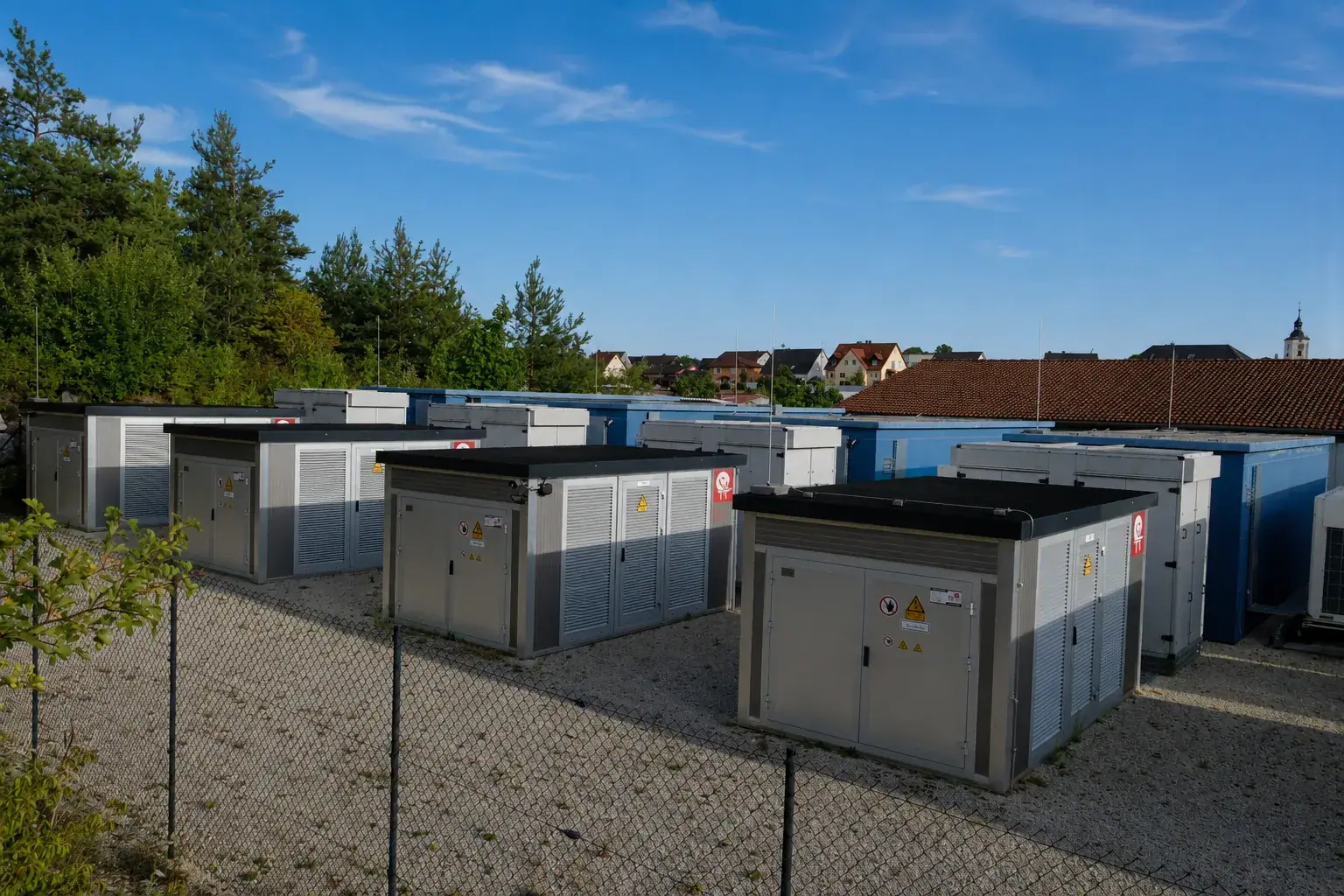
Fire protection for battery storage – risk-oriented and project-specific
Battery energy storage systems place particular demands on preventive and defensive fire protection. What matters is not individual standard measures, but the interplay of storage technology, system design, layout, possible fire scenarios and the conditions at the specific site.
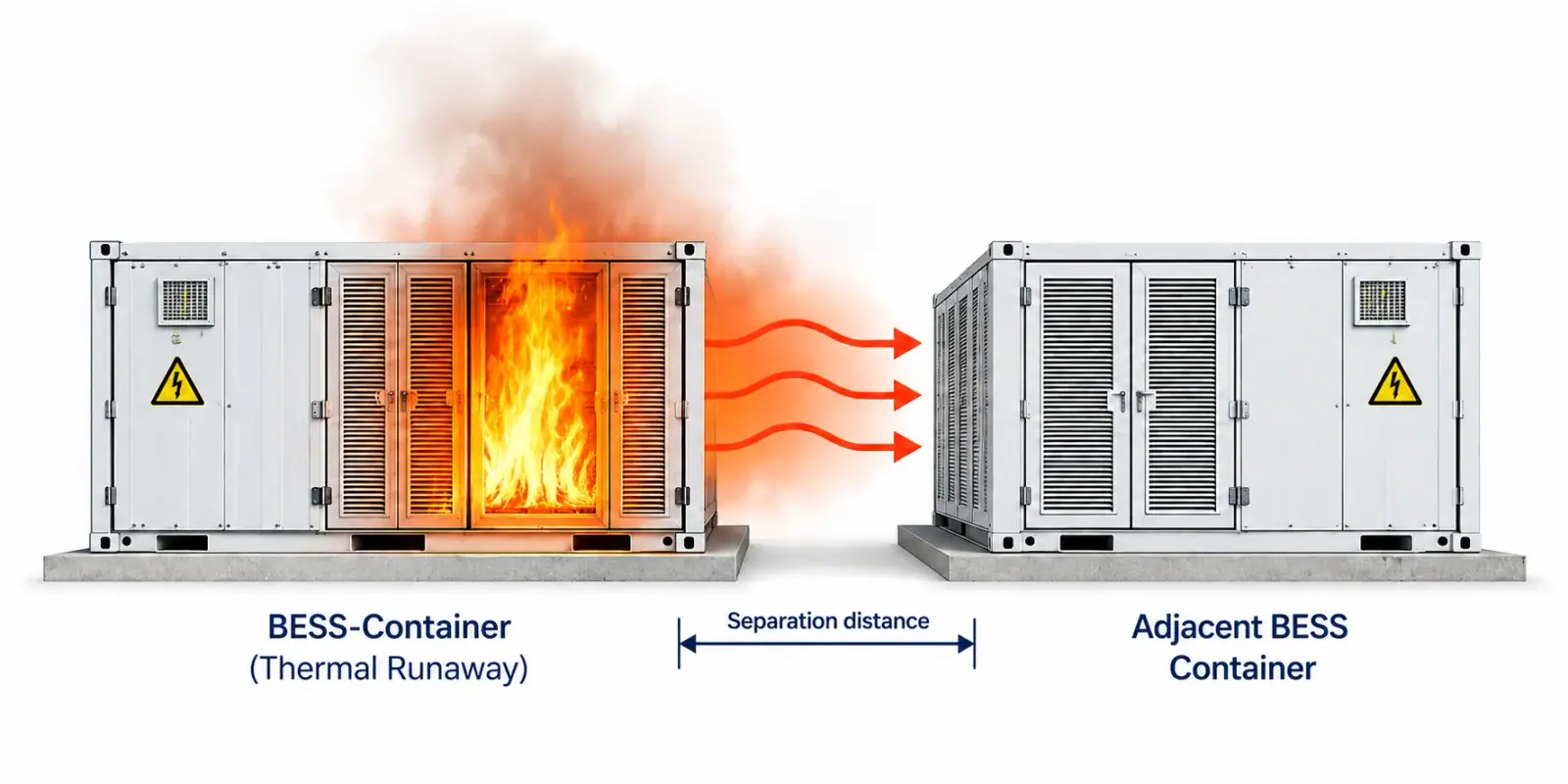
Thermal runaway and fire spread
Thermal damage to a lithium-ion cell can trigger a self-reinforcing exothermic reaction – a “thermal runaway”. For the fire protection assessment it is therefore particularly important whether and how an event can spread within a storage unit and to neighbouring units.
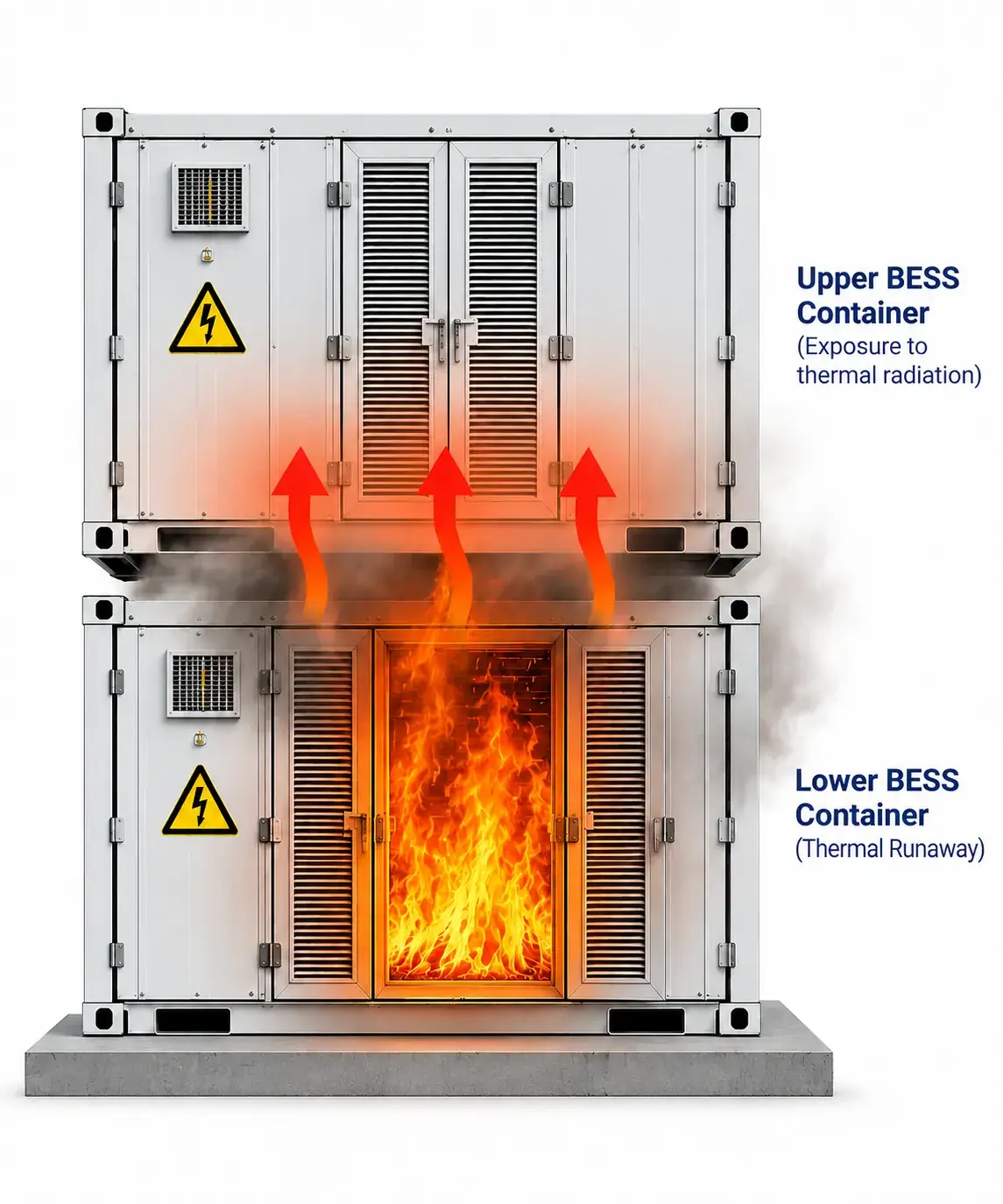
Stacked BESS systems
New system concepts place additional demands on the assessment of heat transfer and fire propagation.
Protection objectives instead of standard solutions
In Germany, there is no specific, comprehensive fire protection standard for BESS.
The starting point is the protection objectives of building regulations and the specific system configuration. International standards and test methods such as NFPA 855 and UL 9540A can provide important insights for the assessment. However, their applicability to the individual project must be evaluated by an expert.
Separation distances, fire spread, firefighting water supply and measures for fire service operations must therefore be considered together.
Even though a battery storage system does not require a building permit, applicable fire safety regulations must be followed. Whether formal proof of fire safety compliance is required depends on state law and the specific project.
An integrated approach to preventive and defensive fire protection
An effective fire protection concept does not end at the boundary of the battery storage system. Accessibility, fire service access routes, safe set-up areas, firefighting water supply and possible operational strategies must already be taken into account during planning.
This is not necessarily about actively fighting a fire inside a BESS container. Depending on the system and protection concept, the operational objective may in particular be to prevent fire spread and to protect neighbouring parts of the facility.
Technical foundations
Which regulations and technical requirements are relevant depends on the facility, the site and the permitting process. International standards are not treated as a basis under German law but, where technically appropriate, are used as a source of technical guidance.
- LBO
- NFPA 855
- UL 9540A
- DIN 14090
- DIN 14095
- VDE 0132
- DVGW W 405